
Diwali fireworks are expected to continue on Dalal Street next week, with four companies collectively seeking to mobilise over Rs 6,600 crore through initial public offerings (IPOs). In terms of the amount raised, this is poised to be the busiest week of calendar year 2023. Tata Technologies (Tata Tech), a subsidiary of Tata Motors, could lead the charge with an IPO projected to be over Rs 2,900 crore. This will mark the first maiden share sale by a Tata Group firm in nearly two decades.

The total income for the second quarter stood at Rs 56.96 crore, while its cash and liquid balance stood at Rs 10,756 crore, the filing said. However, the firm reported a loss from operations (before other income) of Rs 19.59 crore for the second quarter, while its operational loss was Rs 36.96 crore for the six months ending September 30. For the half year ended September 30, the firm had a net profit of Rs 98.44 crore, Reliance Power said in a filing to the BSE.

Fund managers are withdrawing after a two-year long run in public sector bank (PSB) stocks. Domestic mutual funds (MFs) were net sellers of PSB stocks for the first time in nine quarters, offloading shares worth Rs 1,800 crore in the March quarter, said a report by ICICI Securities. In the previous eight quarters, fund houses had invested more than Rs 10,000 in PSBs amid deep discounts in valuation vis--vis their private sector peers.

The total wealth of top 100 real estate barons accounted for Rs 2.37 trillion ($32.7 billion) in 2018, up 27 per cent against 2017's cumulative wealth of Rs 1.87 trillion ($28.6 billion).

One reason why volumes have not increased in the retail segment is that users are not aware of merchants who accept digital currency.

Nirma has roped in BCG and KPMG to advise it on the fundraising options for the acquisition. The company had earlier informed banks that it would raise Rs 5,000 crore to Rs 7,000 crore in the current financial year for the acquisition. Bankers said the company will rely on its funds and future GLS dividend to repay its debt for acquisition.
.jpg)
Net NPA of the 26 public sector banks, including State Bank of India, rose to 2.02 during the year as compared to 1.53 in the previous fiscal. SBI and its five associates recorded a net NPA of 2.04 per cent against 1.76 per cent in the comparable period.

'Sell part of your portfolio where you're making good money, especially in small caps and mid caps.' 'The money which you take home is yours. The money which is there on paper is not yours.

Moody's Investors Service on Wednesday affirmed the ratings of two major Indian IT services companies, Tata Consultancy Services Limited (TCS) and Infosys. In two separate statements, Moody's also retained stable outlook for both the companies. Moody's expects Infosys' revenues to climb by around 13 per cent for the financial year ending March 31, 2023, but moderate to around 8 per cent in the next 2024 fiscal.

'They have since only tried to improve systems. Also, with regulatory guidance from time to time, we are in a position to assess a situation and react in time.'

10 non-bank and non-finance stocks from the BSE500 Index universe that offer an optimal blend of low valuation, reasonably robust revenue and earnings growth in recent quarters, a strong balance sheet, and most importantly, positive cash flow from their operations.

'I don't think we have ever seen such alignment of everything that we need in the banking sector.'

Mutual funds focused on small-caps have emerged as the winner with a net inflow of close to Rs 11,000 crore in April-June quarter, as fund managers struggle to create alpha in the large-cap space, and the trend is expected to continue for some time. On the other hand, large-cap space, which is yet to pick up momentum, witnessed an outflow of Rs 3,360 crore during the quarter under review, data from the Association of Mutual Funds in India (Amfi) showed. Apart from the June quarter, small-cap funds logged an inflow of Rs 6,932 crore in three months that ended in March.
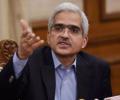
The Reserve Bank of India on Thursday decided to keep policy rate unchanged for third time in a row as it maintains heightened vigil on inflation. The rate increase cycle was paused in April after six consecutive rate hikes aggregating to 250 basis points since May 2022.

said its consolidated net profit has gone up by 7 pc to Rs 3,708 crore while total income in the October-December quarter rose 8.3 pc to Rs 18,093 crore.

Domestic output is stagnating and the expensive LNG will meet the rising energy demand of the growing economy.

Dwaipayan Bose simplifies the whys and hows of revisiting your financial goals

These stocks offer the best combination of maximum 'buy' recommendations from brokerages and share price upside over the next 12 months.

Embattled Adani Group on Monday said it has repaid loans aggregating $2.65 billion to complete a prepayment programme to cut overall leverage in an attempt to win back investor trust post a damning report of a US short seller. In a Credit Note released on Monday, Adani Group said it has made a full prepayment of $2.15 billion of loans that were taken by pledging shares in the conglomerate's listed firms and also another $700 million in loans taken for the acquisition of Ambuja Cement. "The prepayment was done along with interest payment of $203 million," it added.

Cooler weather meant that demand for milk products and value-added items like buttermilk and ice-cream did not show the usual rise.

Hindalco's first quarter (Q1FY23) results indicate healthy domestic volumes for aluminium and copper, and lower cost of production. Subsidiary Novelis saw weak volume trends but it managed to push operating profit margins on a better mix and pricing hikes. The weak global outlook on aluminium is a cause for ongoing concern.

The banking regulator was uncomfortable with the runaway pace at which consumer credit was growing.

A strong business update for the April-June quarter of the 2023-24 financial year Q1FY24 has led to a big jump of over 7 per cent in the share price of Bajaj Finance on Tuesday (July 4). The non-banking financial company's (NBFC's) new loan book grew 34 per cent with 9.9 million new loans booked in Q1FY24 from 7.2 million loans booked in Q1FY23. The company's total customer franchise rose to 72.98 million (as on June 30, 2023), compared to 60.30 million year-on-year (YoY) with the highest-ever quarterly increase of 3.84 million in Q1FY24. Assets under management (AUM) grew by 32 per cent to about Rs. 270,050 crore in Q1FY24 from Rs. 204,018 crore in Q1FY23.

Domestic air passenger traffic touched 1.25 crore in January this year, an increase of 96 per cent compared to the year-ago period, according to rating agency Icra. However, it said the traffic remained around 2 per cent lower compared to the pre-Covid levels -- January 2020. The traffic stood at 64 lakh in January last year. Icra is maintaining a negative outlook on the Indian aviation industry, reflecting the view that the financial performance of Indian airlines is likely to remain under pressure in the near term, even though the recovery in domestic passenger traffic has been healthy.

Investors can sell a part of the stocks, mutual funds, exchange-traded funds, and other securities held in their portfolios at a loss and use this loss to offset tax on the capital gains made on the sale of other securities.

Indices across Indian equity markets have edged towards new record highs before undergoing a small correction in the past few sessions. The National Stock Exchange Nifty has gained 20 per cent in the past year; mid-caps (up 33 per cent), small-caps (up 31 per cent), and micro-caps (up 44 per cent) have done better. Several factors have precipitated this rally.
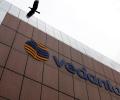
Analysts assert that Vedanta Group's plan to demerge India-listed Vedanta Limited into six listed entities will not resolve the debt problem of its promoter entity, Vedanta Resources (VRL). They suggest that additional asset sales or stake sales by promoters will be necessary to repay the debt. Vedanta is already considering the divestment of its iron-steel division and its copper plant.

The Reserve Bank on Friday superseded the board of the city-based Abhyudaya Cooperative Bank on concerns emanating from "poor governance" and appointed an administrator to manage the affairs of the lender. In what can be seen as a step that should allay depositors' concerns, the central bank did not put any restrictions or moratorium on deposit withdrawals because of the comfort it gets on the bank's finances, according to people in the know. "(The) action is necessitated due to certain material concerns emanating from poor governance standards observed in the bank.

The company's revenue rose 16 per cent at Rs 17,535 crore.
Vedanta investors were jittery on Tuesday as its share price fell and bond yields of its parent firm rose following concerns raised by a rating agency on its capability to repay debt maturing later this year. Shares of the mining and metals major were down by 7 per cent on Tuesday to Rs 268 a piece on the BSE. The company has lost market valuation of 30 per cent in the last one year and 13 per cent since January 1 this year. Yields on the bonds of Vedanta Resources, the parent firm of the BSE-listed Vedanta, shot up to 39.8 per cent - showing investors' rising concern over the group's debt situation

The question is: Will the company have a strong balance sheet to support this massive investment plan?

'The market should maintain optimism on the back of range-bound oil prices, a robust fiscal balance sheet, a better-than-expected monsoon, and moderating inflation.'

Petrol and diesel prices are unlikely to be increased despite firming raw material costs because of upcoming general elections next year, Moody's Investors Service said. Three state-owned fuel retailers -- Indian Oil Corporation (IOC), Bharat Petroleum Corporation Ltd (BPCL) and Hindustan Petroleum Corporation Ltd (HPCL) -- which control roughly 90 per cent of the market, have kept petrol and diesel prices on freeze for a record 18 months in a row. This is despite the raw material (crude oil) cost surging last year, leading to heavy losses in first half of 2022-23 fiscal year before easing oil prices propelled them to profitability.

We have millions of newbie investors who are clueless about how to handle sudden and severe adverse market reactions, which arrive from time to time, observes Debashis Basu.

Sales expansion also down 4.4%

While rising interest rates and tighter liquidity are giving negative signals for the financial sector, increasing economic activity could mean higher business volumes for lenders. Liquidity in the banking system has moved from Rs 8 trillion surplus into a deficit of Rs 33,000 crore over the 2022 calendar year. By the end of November, bank credit had grown 17.5 per cent YoY (year-on-year).

Foreign portfolio investors (FPI) have pumped in a net sum of Rs 49,553 crore in Indian markets this month so far on back of high liquidity coupled with improving global indicators and clarity after the US presidential elections. FPIs invested Rs 44,378 crore in equities and Rs 5,175 crore in the debt segment, taking the total net investment to Rs 49,553 crore between November 3-20. In October, FPIs invested a net sum of Rs 22,033 crore.

Lenders and shareholders of Reliance Industries Ltd (RIL) will meet on May 2 to demerge the firm's financial services business. This is expected to create a big player in segments including the NBFC (non-banking financial company) space with net worth of Rs 25,851 crore as of March 2022. According to the plan, RIL shareholders will get a share in the demerged entity for each one held in the company.

Buying and selling of exchange trade fund (ETF) units worth less than Rs 25 crore will now have to take place compulsorily on the stock exchange platform, according to a new rule which comes into effect on Tuesday. The fresh norm, which comes into being after two deferments, is aimed at boosting liquidity and reducing tracking error. At present, investors directly deal with the asset management companies (AMCs) for purchase and redemption of ETFs - passive schemes that track a particular benchmark such as the Nifty50 index.

Revenue of the Bengaluru-based firm grew 1.7 per cent to Rs 17,078 crore in the June quarter as against Rs 16,782 crore in the year-ago period.
